Thursday, March 12, 2015

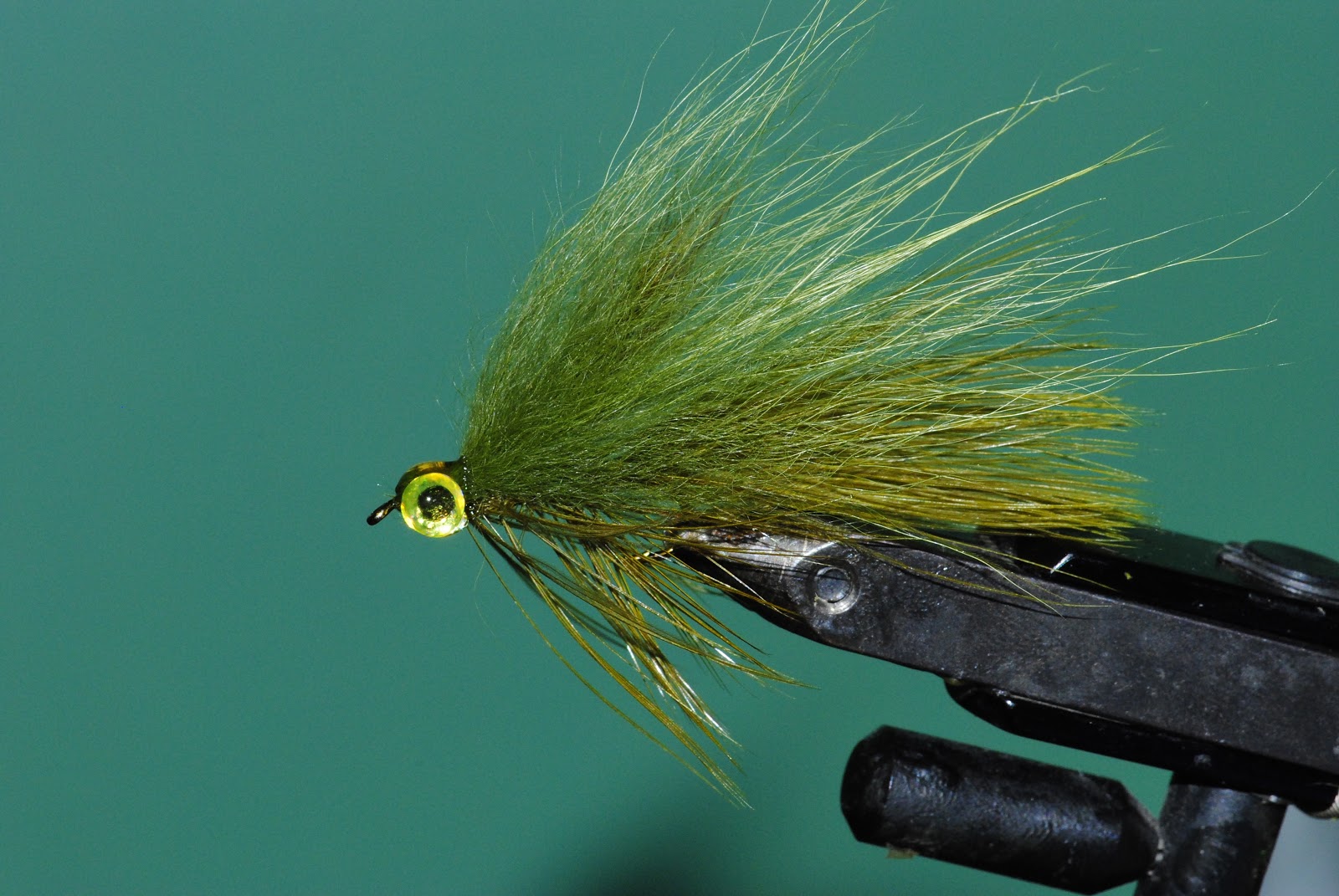
Fly Gallery Bully's Blue Gill Spider


Bully’s Blue Gill Spider
Hook: size 10-12 1xl dry fly hook
Thread: UTC 140
Wire: Lead wire 0.020 or greater
Body: Medium rayon chenille
Legs: Medium Round Rubber legs (usually white)

The Bully’s Blue Gill Experience

The Bully’s Blue Gill Spider is a staple of blue gill and river bass fishing in Central Texas. Develop by Roxanne and Terry Wilson, this fly makes use of the aggressive nature of bass and sunfish by descending quickly and fluttering while stripped to mimic a struggling or escaping insect. With a body made of chenille, Bully’s blue gill spiders can be constructed in any color of available chenille. The legs MUST BE RUBBER! No silicone legs! The specific action of this fly requires legs with the flexibility of rubber. Silicone is not flexible enough at short lengths to achieve the same effect in the water as rubber. This versatile fly has even led to controversy in our club as rival sunfish anglers debate which color variant out fishes all others. Woolly bugger chenille in brown with brown rubber legs versus chartreuse medium rayon chenille with white rubber legs is often the local debate.


Tuesday, February 3, 2015

Fly Fishing Show Breakdown

It’s the winter fly fishing show season in Texas once again, and I thought I would pass on some advice about getting the most out of the shows you attend.  Shows break down basically into five categories: Keynote Speakers, Classes, Products, and Fly Tiers.

Keynote Speaker:
Flies from Dave Whitlock's seminar
These individuals are usually of national or even international renown for their skills. In other words, they were likely paid to come speak and did not just volunteer to help the hosting organization. As an attendee these should be priority one. They represent both a unique chance to learn something as well as an investment by the hosting organization. Thus, attending these seminars is critical to the event as well as making a good impression on the invited speaker. Few things are worse then speaking to a nearly empty room. Really well known speakers will have a crowd get to their seminars early if you want a seat.
Admittedly, scheduling conflicts will occur and you will have to decide which of the two seminars you want to attend. I always consider the likelihood of seeing a speaker again or if I can directly contact the speaker later in the show or at their shop.  In all cases the goal is to learn! I usually have a notepad or someway to write down important points in any seminar I attend. A lot of information will be taught by speakers during the whole day, and staying organized will make referencing it later much easier.

Classes:
            Classes represent a means to learn a skill. A class is led by a skilled volunteer from the hosting organization. These usually include casting, fly tying, and perhaps more unique courses such as tenkara or entomology. These are usually happening throughout the event and will over lap at least a little with other events, but the classes are often small with mostly one on one instruction in the subject being taught. These are a great way to get a foundation in something new or get advice on something that has been troubling the past.

Products:
            Shows usually include a number of product dealers or company representatives. These people and the items in their booths are a great way to examine new products or even purchase items not regularly found in your area. They are also a great way to test and learn about items that are technically complicated.
Fly rods are a great example. Will you cast better with an $800 dollar rod? What does a fiberglass or bamboo fly rod cast like? Casting areas are standard at fly shows. Get one of these rods in hand and cast it.

Fly Tiers:
            There are whole shows dedicated to this facet of fly fishing, but in general the tiers will be featured as a gallery with several tables each having a tier or two present. Alternatively, they may be spread out with the organizations to which they belong. Often clubs keep a skilled tier at their table to attract people. Be sure to find a local club and chat with them in you are not already a member. 
If you enjoy tying be sure spend the time watching a fly being tied from start to finish and if you still do not understand the tricks…sit there and watch it again. Tying is about the details. Often it is the minor touches that give a fly its eye appeal, not the big obvious things. It is not uncommon if you are willing to spend the time watching the process for a tier to give you the fly. Admittedly this is entirely up to the tier, but it does happen frequently.

The winter shows are very good in Texas I hope to see you there.

Feb. 7, 2015
Dr. Ed Rizzolo Fly Tying Festival
Bethany Christian Church, located at 3223 Westheimer Houston, TX.
From 8:30 am - 4:30 pm. Admission fees are: Adults $10.00; Students (with valid I.D.) and Seniors (62+) $5.00; Children under 12 Free; Family $15.00.

Feb. 20-22, 2015
GRTU Troutfest
BANQUET AND AUCTION:
6:00 PM Friday Feb 20th 2015
EXPOSITION: Free Admission
Saturday Feb 21st 8:30 AM - 5:00 PM & Sunday Feb 22nd 8:30 AM - 4:00 PM
Fly Fishing Film Tour Feb. 21st
Doors open at 6:00 PM, show is from 7:00 - 9:30.
Purchase Tickets ($15/adult, $12/children 12 and under) at the GRTU booth in the expo tent.

http://www.grtutroutfest.org/

Friday, January 2, 2015

Making your own Flavor of Flies

I often mess with other people’s fly patterns on my vise. In other words, I adjust the materials or modify the pattern in some minor way.  At what point do minor modifications make a new pattern? I have no idea and I am not too bothered by it because I do my best to give credit to the patterns that inspire my own. That being said, I will happily bastardize anything that I see needing a little “Bertrand Flavor.” Usually, my personal touch comes in one of three forms:

1)   Simplification
Simplifying flies is always risky. It is safe to assume the original pattern included essential materials in the pattern. However, I feel the features of the materials often outweigh the amount of material used. Thus, it is often possible to reduced the steps or amounts of certain materials, but maintain the specific and often essential quality in the pattern. For example, a Half Back fly includes a second palmered hackle over the anterior portion of the peacock hurl body. However, I find that the flies without the anterior hackle catch fish equally well. I believe the anterior hackle is unnecessary because the qualities of rear palmered hackle are enough to create the right features in the water.

2)   Modification
Alternatively, I can take an existing pattern and add materials or steps to the tying process that produce a more reliable fly (at least until its actually tested on the water). These modifications often take simple forms. Brass beads are common additions to many classic patterns, but I favor colored glass beads too. These beads come in many different colors and can add either bright contrast or more subtle accents to a common fly. What is most important is that the pattern now looks slightly different from the common pattern thrown by most others on the water.

3)   Substitution
Again these choices can be risky, but often prove a rewarding solution once tested on the water. I admit when I substitute it is often because I lack the exact material called for by the pattern recipe. Sometimes these choices work out and some times they do not. For example, there is no substitution for rubber legs on a Bully’s Bluegill spider. While other leg materials can be tied on the fly, no other material has the appropriate stiffness to act correctly when stripping the fly. Silicone and spanflex are both too soft to return to the open standing position necessary to create the parachute like descent in the water that drives blue gill crazy.

When I make the decision to change a pattern I usually tie about 5-6 for my fly box. If the flies prove themselves I will add more. However if they do not act as exoected in the water or failed to produce I remove them from my flybox.  However, with 5-6 flies, I ensure have enough flies to properly test it on the water (and leave a few in trees).


You have to be fearless about tying flies. Often changes to flies prove ill advised, but every so often a tier stumbles into really amazing flies by simply taking at shot at something with a bit of unique flavor.

Thursday, December 11, 2014

Under Appreciated Hen.

           Under the theme of being a poor student, I am always looking to cut corners in fly tying, but still produce excellent flies. Sometimes this approach, just does not work. There is no substitute for DRY FLY HACKLE!!!! Suck it up, buy one light and one dark pelt and your bases will be covered.
            As I step off my soap box, I can return to the point of this article: Quality hen capes are incredibly versatile feathers for the frugal fly tier. In general, a Whiting Herbert Miner cape runs about $10. If you consider the high number of feathers on a cape this will be a worthwhile investment. Hen feathers seem under appreciated because everyone wants rooster hackle for flies like woolly buggers and dries. Admittedly a full high quality rooster saddle is a beautiful thing to just look at let alone use to tie flies.  However, with a price point of about $50 for a middle grade saddle, I do not use these feathers on anything that does not need them.  Thus, I love versatile feathers at good prices.       
From left to right: Rooster saddle, Brahma Hen cape, India hen saddle, Coq de Leon hen saddle, and Herbert Miner saddle.
Hen represents one of the more recent additions of my “often used” materials list. A hen cape feather can do many different things, when loosely palmered it makes for a very buggy woolly bugger hackle, when tightly palmered at the head of fly it can make the legs of a nymph or the collar on a soft hackle. The fibers can make a beard on streamer patterns. Paired with other feathers, they can be made into a classic wet fly wing, or form the entire wing as four feathers do in matuka style flies. They are also commonly used to make claws on crawfish patterns and the legs/tails on top water patterns.
            There really is not much that these versatile feathers cannot do. Hen feathers also come in a variety of types, and I have come to use them in different ways. I have recently been tying Tenkara flies and using a Whiting Brahma hen neck because the fibers are soft (as hen should be), but lack the webby fibers that cling together like the aforementioned Herbert Miner. However, that all depends on the look and action I want in my fly. I have tenkara flies tied with both types. Additionally, I have used olive Coq de Leon hen capes to make collars on a bugger/softhackle style pattern I found online. The Coq de Leon is heavily mottled and makes great bug like legs on a fly.
            On the whole I think hen has become one of my favorite feathers and the price point works for me personally. I figure as long as teen idols do not take any interest in using these feathers for fashion, we fly tiers will be ok. Now go chase some capes down and hit the vise.


Monday, November 10, 2014

A Woolly Bugger Free Life

Well first of all I'm glad to be back writing again for Siren Flies. Finishing up a masters degree will throw a monkey wrench in anyone's blog writing.

Let me say that I have fished and tied woolly buggers plenty of times and in a number of varieties. However, I am a tier and fisherman that is always trying new things. Thus, moving beyond woolly buggers was an inevitable consequence of tying new flies. Please do not misunderstand, a number of fly patterns in my box represent more derived versions of a "bugger" pattern, but there are not any true woolly buggers.

Rather then saying you should throw all your buggers out what want the readers to take away from this article is to move beyond the bugger. I took two primary steps to a woolly bugger free life.

Step 1: Take on the challenge of developing a pattern that has features of your favorite bugger, but with a different twist.  For example, if you prefer a bugger with a grizzly hackle incorporate that into a zonker pattern as either a full palmered hackle or even just a collar.

Step 2: A woolly bugger free life is not for the feint of heart. You need to stop fishing your woolly buggers. One possible consequence of this step is that there will be a brief period of fewer fish days until you develop new confidence patterns that reliably catch fish. These days can perhaps be shortened by asking around at local clubs and fly shops for new "non-bugger" patterns.

My primary fishing quarry are sunfish and bass in the rivers of Central Texas. On any given day fishing for these species, a woolly bugger variant in the right size will likely work. However, I usually fish an assortment of size 10 and 12 flies in several colors (Bully's bluegill spider in chartreuse and white, white foam poppers, and black foam ants with white legs). I promise that if you have several colors of poppers and bully's you can find some success of on any central Texas river if you cast as close enough to the river bank.

Good luck on becoming woolly bugger free.

PS: Its ok to relapse back to woolly buggers if the situation calls for it.


Monday, August 11, 2014

Grab and Go Boxes

by Nick Bertrand (primary contributor to Siren Flies)

This will probably not be a new concept for many of our members, but a “Grab and Go Box” for flyfishing has become a must for myself. I also know for a fact several of our members keep these boxes ready to go.

The idea is simple: One box that I can grab and then go fishing because I know it will have all I need for a day of flyfishing.

This box allows me to centralize the gear I use most and ensures some essentials are always with me.

The recipe for the box’s contents will very from person to person and certain things do will have to change seasonally.

Year round:

·      Fly bag
            The bag I will actually carry on the water with all its necessary contents.

·      Wading boots (if they fit in the box…mine do not)

·      Spare polarized sunglasses

·      Flash light

·      Spare glow sticks
I keep one of these in my bag incase I end up fishing late without a flash light)

·      First aid kit
I like the one or two man camping sets. They come prepackaged in small bags and come with all the essentials to deal with most small first aid needs on the water

·      Bug repellent and Sunscreen
I keep fluids like these in a plastic bag to protect against leaks. A reel covered in greasy sunscreen is not fun to use.

·      Multi tool (leatherman)
                        It can deal with all kinds of potential problems.

·      Waterproof Rain Shell Jack
I use something lightweight without insolation in case I decide I need to carry it with me and so I can use it any season.

·      Spare reel
                        I change it to match the rod and circumstances of the trip.
·      Spare fly box
Usually a box of big meaty flies.

Summer:

·      Buff style face cover

·      Sun Gloves

Winter:
·      Waders
                        If they fit in the box that is great mine usually don’t.


·      Spare Change of Clothes

The first time I ever fished with a club member in winter, I went five steps into the water and I went down. Completely soaked clothes end a day of winter fishing…period! However, a spare set means you change and get back on the water once you have emptied your waders.

·      Additional clothing layers
I usually keep a down vest available as a very warm core inner layer.

The goal of the box is to keep life simple, over packing it is easy and keeping the physical size of the box small enough to move without a buddy is a good rule of thumb.
            Also remember to properly dry any wet gear that goes into the box. I usually leave the lid off my box for about 24 hrs before repacking it.


Hopefully this will help stream line your fly fishing.